

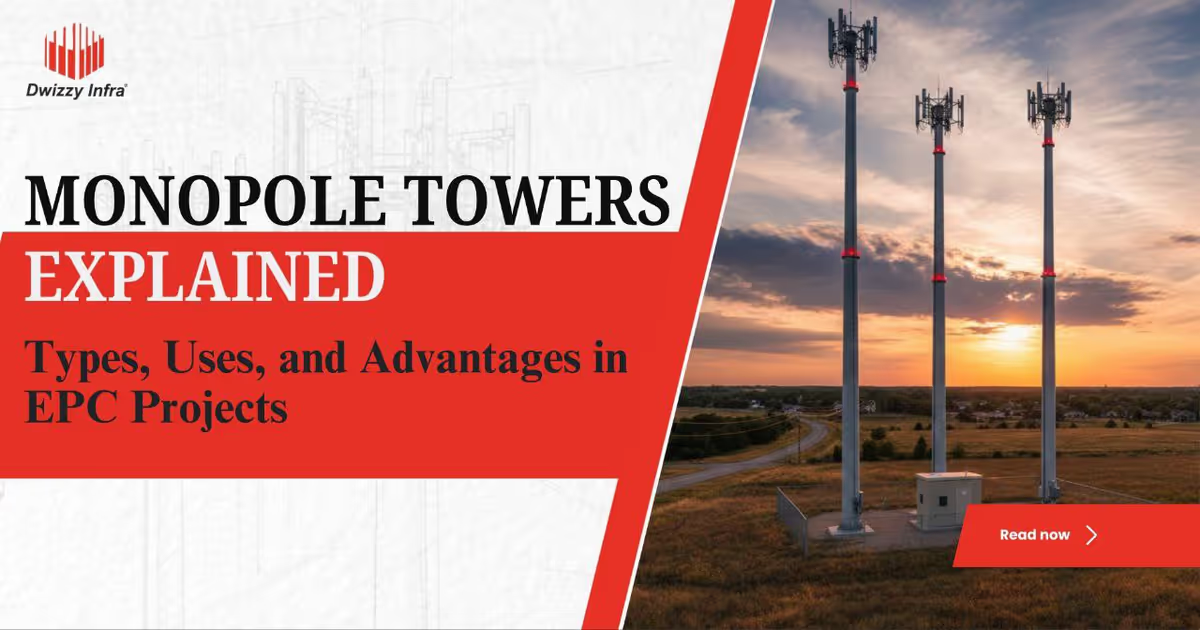
Power transmission is the backbone of modern infrastructure. Whether you are managing an urban metro project, constructing a highway transmission line, or designing a high-voltage grid, the choice of tower can significantly impact project efficiency, safety, and cost. At Dwizzy Infra, we often explain to our clients that monopole towers are a modern, space-efficient solution ideal for EPC (Engineering, Procurement, and Construction) projects across India.
In this article, we will explore what monopole towers are, their types, applications, advantages, and why they are increasingly preferred over traditional lattice towers. If you’re an EPC contractor, project manager, or engineer, this Monopole guide will provide the technical insights needed to make informed infrastructure decisions.
What Are Monopole Towers?
Monopole towers, also called single-pole towers, are vertical structures designed to support electrical transmission lines. Unlike lattice towers, which use a wide base and multiple legs, monopoles consist of a single steel pole that can efficiently carry high-voltage lines.
Types of Monopole Towers
Stepped Monopole Towers
These are typically used for medium-voltage distribution lines. Their stepped design makes them simple to construct and maintain, reducing installation time and costs.
Tapered Monopole Towers
Commonly used in high-voltage transmission projects, tapered monopoles offer superior structural stability and higher load capacity. They are particularly effective in handling environmental stresses such as wind and seismic activity.
Triangular or Multi-Leg Poles
These towers are engineered for heavy civil projects requiring higher structural strength. Multi-leg monopoles can support multiple circuits simultaneously and withstand extreme loads, making them ideal for EPC projects involving metro rail or highway transmission lines.
Key Applications of Monopole Towers
"We at Dwizzy Infra often recommend monopole towers for metro rail, urban transmission, and highway projects," says a senior project engineer. Applications include:
- ● Urban power transmission corridors
- ● Metro rail electrification
- ● Highway and road corridor electrification
- ● Telecom and communication lines
Monopoles solve the problem of limited land space while maintaining safety and reliability. For EPC contractors, this means faster approvals and lower acquisition costs.
Advantages of Using Monopole Towers in EPC Projects
- ● Smaller Footprint: Reduces land acquisition and project impact.
- ● Faster Installation: Single-pole design simplifies erection and reduces project timelines.
- ● Aesthetic Appeal: Clean, minimalistic look suitable for urban and scenic areas.
- ● Low Maintenance Costs: Durable steel construction resists corrosion and environmental wear.
- ● Flexibility: Can handle multiple transmission circuits and adapt to various voltages.
If you are planning an EPC project in India, choosing monopole towers can save both time and cost while ensuring reliability and compliance with safety standards.
Monopole Towers vs Lattice Towers
Monopole towers have several advantages over traditional lattice towers:
- Space efficiency: occupy less land
- Faster erection: fewer components mean quicker assembly
- Lower maintenance: simpler structure reduces inspection and repair needs
Industry studies indicate that monopole towers can reduce land usage by up to 40% in urban corridors compared to lattice towers.
Engineering Considerations for Monopole Towers
Proper engineering ensures long-term safety and reliability:
- ● Foundation design: Pile foundations and ground improvement are critical.
- ● Load testing: Static and dynamic testing validate structural integrity.
- ● Material selection: High-strength steel ensures durability.
- ● Compliance: Adherence to safety regulations and national standards.
Case Studies: Monopole Towers in Action
At Dwizzy Infra, we have completed 50+ EPC projects involving monopole erection. One notable example is a metro rail electrification project, where tapered monopoles were used to optimize space while maintaining high-voltage transmission capacity. Challenges such as urban congestion and wind load stability were efficiently managed, showcasing our technical expertise and commitment to quality.
Contact us today to start your project or learn more about our monopole erection services.
Conclusion
Monopole towers are a cost-effective, space-efficient, and reliable solution for modern EPC and power transmission projects. At Dwizzy Infra, we combine engineering expertise, advanced equipment, and proven project management skills to deliver monopole erection services that meet the highest standards of quality, safety, and efficiency.
FAQs About Monopole Towers
1. What is the difference between a monopole and a lattice tower?
Monopoles are single-pole structures with a smaller footprint, faster installation, and lower maintenance compared to lattice towers.
2. Where are monopole towers most commonly used?
Ideal for urban areas, metro rail, highways, and telecom projects where space is limited.
3. How long does it take to erect a monopole tower?
Installation is typically faster than lattice towers due to simpler foundations and assembly.
4. Are monopole towers suitable for high-voltage transmission?
Yes, especially tapered and multi-leg monopoles designed for heavy-duty loads.
5. Why choose Dwizzy Infra for monopole erection services?
With 50+ completed projects, 24/7 support, and expertise in EPC and heavy civil works, Dwizzy Infra ensures safe, efficient, and cost-effective tower installations.